
 HOT LINE: +86-13968935808
We offer flexo printing machines and complete packaging solutions, certified by CE and ISO9001.

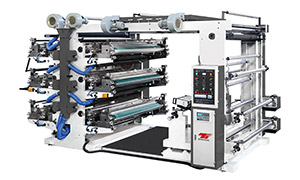
YT Series
6 Colors Flexo Printing MachinePrinting Width: 960mm
Printing Speed: 5-50m/min
The YT Series Six-Color Flexo
Printing Machine uses relief printing technology to print patterns,
text, and other graphics. During operation, ink is transferred from the
ink fountain roller and anilox roller to the raised image areas of the
printing plate. The pressure roller then applies printing pressure,
transferring the ink from the plate onto the substrate—such as paper or
plastic film—to form the desired patterns and text.
This
machine is an ideal printing solution for food paper packaging,
supermarket handbags, horse bags, clothing bags, and other packaging
applications.
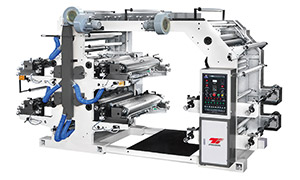
YT Series
4 Colors Flexo Printing MachinePrinting Width: 760mm
Printing Speed: 5-50m/min
The YT Series Four-Color Flexo Printing Machine is suitable for printing packaging materials such as polyethylene, polypropylene plastic bags, glassine paper, roll paper, and non-woven fabrics. It is an ideal printing solution for food paper packaging, supermarket handbags, horse feed bags, clothing bags, and other packaging applications.
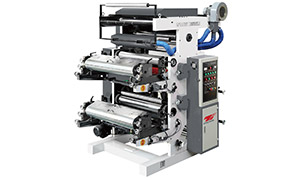
YT Series
2 Colors Flexo Printing MachinePrinting Width: 560mm
Printing Speed: 5-50m/min
The two-color flexographic printing machine uses relief printing technology to print patterns, text, and other graphics. During operation, ink is transferred from the ink fountain roller and anilox roller to the raised image areas of the printing plate. The pressure roller then applies printing pressure, transferring the ink from the plate onto the substrate—such as paper or plastic film—to form the desired patterns and text. The printing process is completed after the ink is dried.This type of machine is widely used in industries such as packaging, labeling, and sticker production, with particular application in the food, pharmaceutical, daily necessities, and cosmetics sectors.

COMPACT VERTICAL DESIGN
The stack type configuration places each color unit vertically above the previous one, which significantly reduces the machine's floor space requirement. This compact layout is ideal for small to medium sized printing shops with limited factory area. Easy access to each deck simplifies operation and maintenance tasks, while the short web path minimizes material waste during setup and changeovers.
COST EFFECTIVE SOLUTION
Stack flexo printing machines offer a lower initial investment compared to central impression or inline presses. The simple mechanical structure reduces manufacturing cost, making it affordable for growing businesses. Operating expenses are also lower due to fewer moving parts and less complex drive systems. You get reliable multicolor printing without overspending on advanced features you may not need.
VERSATILE SUBSTRATE HANDLING
This machine handles a wide range of materials including paper, film, foil, and lightweight board with consistent registration. The independent tension control on each deck allows quick adjustments for different web thicknesses and elasticity. Whether you are printing simple bags, labels, or wrappers, the stack flexo press adapts easily. This flexibility reduces the need for multiple dedicated machines in your facility.
SIMPLIFIED COLOR REGISTRATION
Each printing deck can be adjusted laterally and circumferentially while the machine is running, allowing real time registration corrections. The open design gives operators clear visibility of all color stations simultaneously. This makes achieving accurate multicolor alignment much faster than on fully enclosed press types. Reduced setup time and fewer rejected prints directly improve your daily production efficiency.
Q: How often should I replace the doctor blade on a Stack Flexo Printing Machine when running abrasive white inks?
White inks contain titanium dioxide, which is highly abrasive. On a Stack Flexo Printing Machine, doctor blade life for white ink is typically 4–8 hours of continuous running. To extend life, switch to a tungsten carbide‑tipped blade or a ceramic blade – these can last 20–30 hours. Also reduce blade pressure to the minimum needed (around 0.8–1.0 bar). Use a blade with 0.2 mm thickness instead of 0.15 mm for better wear resistance. Keep a log of blade changes; if you see streaks or loss of solid density, change immediately. Some printers dedicate a specific Stack Flexo Printing Machine for white ink to avoid cross‑contamination and manage wear more predictably.
Q: My Stack Flexo Printing Machine struggles to maintain register when I accelerate from 50 to 150 m/min. Why?
Register drift during acceleration on a Stack Flexo Printing Machine is usually due to inertia differences between print decks. Older presses with a common line shaft suffer from torsional windup. Modern servo‑driven presses have electronic registration that auto‑corrects. For existing machines, check that all bearings are lubricated and that the dancer rollers move freely. Also calibrate the register sensors at the actual running speed – static calibration is not enough. Add an acceleration ramp time of 10–15 seconds instead of 3 seconds. If the problem persists, the control PLC may need a software update. Properly tuned, a Stack Flexo Printing Machine should hold ±0.1 mm register across the entire speed range.
Q: What is the best way to store anilox rollers when not using the Stack Flexo Printing Machine for more than a week?
Improper storage ruins anilox rollers – the most expensive consumable on a Stack Flexo Printing Machine. Clean the roller thoroughly with an ultrasonic or chemical cleaner, then blow dry with filtered air. Wrap the roller in foam or soft plastic, never paper or cardboard (which sheds fibers). Store horizontally on dedicated V‑blocks, not on end. Keep in a dark, temperature‑controlled room (18–25°C, 40–60% RH) away from UV light and dust. Do not store with ink residue – even dried water‑based ink can etch ceramic surfaces. Proper storage can double the life of a $1,500 anilox roller. Label each roller with its line count and volume for easy retrieval.
Q: How do I troubleshoot ghosting caused by the previous print image reappearing in the next solid area on my Stack Flexo Printing Machine?
Ghosting on a Stack Flexo Printing Machine often happens when the anilox roller is too large in diameter relative to the plate cylinder, causing a harmonic pattern. First, change the anilox roller diameter – use a smaller anilox (e.g., 125 mm instead of 150 mm) to break the harmonic. Second, increase the number of anilox cells per plate repeat length. Third, adjust the doctor blade angle to 30–35° for better ink metering. Ghosting can also be mechanical: worn bearings in the idler rollers cause micro‑vibrations. Run a ghosting test pattern (solid + fine lines) at different speeds. Some Stack Flexo Printing Machine operators solve ghosting by simply changing the anilox rotation direction from forward to reverse.
Q: What is the average annual maintenance cost for a mid‑range Stack Flexo Printing Machine running two shifts?
For a typical 6‑color mid‑range Stack Flexo Printing Machine running 16 hours/day, budget 8–12% of the machine‘s purchase price annually. On a $300,000 press, that‘s $24,000–$36,000 per year. Major cost items: anilox roller reconditioning ($1,500–$2,500 per roller, every 2 years), doctor blades and seals ($4,000/year), bearing replacements ($3,000/year), and electric/electronic parts ($2,000/year). Preventive maintenance (lubrication, calibration, cleaning) can reduce unexpected breakdowns by 60%. A well‑maintained Stack Flexo Printing Machine has an uptime of 92–95%; neglected machines drop to 70% uptime, costing far more in lost production than the maintenance budget. Always track cost per running hour.
05/10
2026
Key Features of a Modern Stack Flexo Printing Machine: What to Look for in Your Next Purchase
When evaluating a Stack Flexo Printing Machine, understanding its core features helps match the press to your specific application. The first feature is the press type: central impression (CI) offers excellent register control for thin films, while in-line sta...
04/25
2026
Essential Accessories for Your Stack Flexo Printing Machine: Upgrades That Pay for Themselves
A Stack Flexo Printing Machine is the core, but the right accessories can dramatically improve performance, safety, and ease of operation. One of the most impactful accessories is an automatic ink dispensing system. It mixes precise amounts of base inks and so...
04/25
2026
Advanced Process Control in Stack Flexo Printing Machine: Optimizing Dot Gain, Ink Transfer, and Color Matching
The science of flexographic printing has advanced significantly with the introduction of closed-loop process controls. A modern Stack Flexo Printing Machine uses sensors and actuators to maintain optimal printing parameters without operator intervention. One c...
04/25
2026
Innovative Applications of Stack Flexo Printing Machine Beyond Packaging: From Wallpaper to Printed Electronics
While the Stack Flexo Printing Machine is best known for flexible packaging and labels, its versatile printing principle has found exciting new applications. One growing area is decorative printing, such as wallpaper and laminate flooring. Using specially form...

Elsie
2025-3-12
Impressed by our stack flexo printing machine. Great print quality, easy setup, and your support team answered all questions fast. Efficiency up 30%. Highly recommend.

Debby
2025-11-7
Grateful for after-sales service on our stack flexo printing machine. Technician arrived in 24 hours. Machine runs perfectly with consistent registration. Your training was excellent.

Cherry
2025-4-27
Positive experience with your stack flexo printing machine. Low ink consumption and energy efficient. Logistics delivered early. Perfect for precise color control and minimal waste.

Alden
2025-5-8
Six months with your stack flexo printing machine. Quick-change rolls save hours. Support agent was friendly and sent a video guide. Robust frame, high speeds. Five stars.
Learn more about the details of this product, you can read — Stack Flexo Printing Machine Ultimate Guide