photopolymer plate
This wiki content introduces plate making principle, production process, performance advantages and application scenarios of photopolymer plates, comparing them with traditional rubber flexo plates to highlight their advantages in high-definition flexo printing.
Photopolymer plate is a new type of high-precision photosensitive flexo printing plate made of liquid or solid photopolymer resin as the main raw material, which has become the mainstream plate material replacing traditional rubber flexo plates in modern high-end flexo printing industry. This plate material relies on ultraviolet light cross-linking reaction to complete pattern curing and molding, featuring ultra-high pattern reduction capability and stable printing performance in long-term mass production.
The whole plate making process of photopolymer plates includes four standard steps: back exposure, main pattern exposure, developer washing and post curing treatment. Back exposure enhances the overall thickness and structural strength of the plate base. Main exposure cures required raised patterns according to digital film or direct laser data. Washing process removes uncured liquid resin to form concave and convex printing patterns. Post UV exposure further improves wear resistance and chemical corrosion resistance of finished plates.
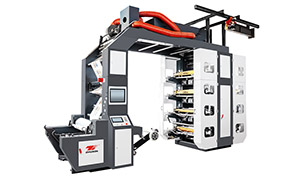
High Speed Flexo Printing Machine - Stack Flexo Flexo Printing Machine
Compared with traditional rubber flexo plates, photopolymer plates have obvious comprehensive performance advantages. Firstly, they support 1% to 99% full gradient halftone dot restoration, which can perfectly present complex color gradient patterns and fine text details that rubber plates cannot achieve. Secondly, photopolymer plates have uniform overall hardness without local hardness deviation, ensuring consistent printing effect in all areas of the plate surface. Thirdly, they have better ink resistance, adapting to various water-based, solvent-based and UV flexo ink systems.
Digital direct plate making technology further upgrades the application effect of photopolymer plates. Traditional analog photopolymer plate making needs manual film covering exposure, which is easy to produce tiny light scattering errors. Modern digital photopolymer plates adopt laser direct engraving exposure without intermediate film materials, greatly improving pattern positioning accuracy and reducing plate making error. This technology is widely used in high-end label printing, pharmaceutical packaging and food flexible packaging fields with extremely strict printing precision requirements.
Different types of photopolymer plates are designed for differentiated production demands. Thin photopolymer plates are matched with high-speed narrow web presses for fine label printing. Thick photopolymer plates are customized for corrugated board printing with strong substrate fitting demand. In addition, special anti-scratch photopolymer plates are developed for harsh industrial printing environments, solving the problem of pattern wear caused by long-time high-speed friction in large-volume flexo production.