flexographic printing machine
The history of flexographic printing machines dates back to the early 20th century. The first flexographic presses were relatively simple and used rubber plates for printing. Over time, the technology has evolved significantly, with improvements in plate - making materials, ink formulations, and press design. Today's flexographic printing machines are highly sophisticated pieces of equipment capable of producing high - quality prints at high speeds.
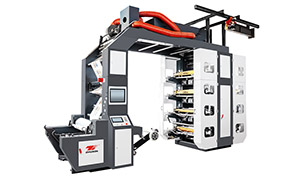
High Speed Flexo Printing Machine - Stack Flexo Flexo Printing Machine
The working principle of a flexographic printing machine is based on the transfer of ink from a flexible relief plate to the substrate. The plate is mounted on a plate cylinder, which rotates in contact with an anilox roller. The anilox roller has a fine - celled surface that picks up ink from an ink pan and transfers it to the plate. The ink on the plate is then transferred to the substrate as it passes between the plate cylinder and an impression cylinder. This process allows for precise and consistent ink application, resulting in high - quality prints.
Modern flexographic printing machines are equipped with a range of advanced features. One of the most significant is the use of computer - to - plate (CTP) technology. CTP allows for the direct transfer of digital images to the printing plates, eliminating the need for traditional film - based plate - making processes. This not only speeds up the plate - making process but also improves the quality and accuracy of the prints. Another important feature is the closed - loop color control system. This system uses sensors to monitor the color of the printed output in real - time and makes automatic adjustments to the ink flow and other printing parameters to ensure consistent color reproduction throughout the production run.
In terms of production efficiency, modern flexographic printing machines are designed for high - speed operation. They can print at speeds of several hundred meters per minute, depending on the type of press and the substrate being used. This high - speed capability makes them ideal for large - volume production applications, such as packaging and label printing. Additionally, many modern presses are modular in design, allowing for easy expansion and customization to meet specific production requirements.
The applications of flexographic printing machines are diverse. They are widely used in the packaging industry for printing on cardboard boxes, plastic bags, and flexible packaging materials. In the label printing industry, flexographic presses are the preferred choice for producing high - quality labels for various products. They are also used in the production of newspapers, magazines, and other printed materials where high - speed, high - volume printing is required. As technology continues to advance, we can expect further improvements in the performance and capabilities of flexographic printing machines, opening up new possibilities for the printing industry.