flexo tags and labels
Flexo printing is widely used for producing tags (hang tags, retail tags, price tags, luggage tags) and labels (product identification, barcode labels, warning labels) that are often thicker, stiffer, or have special features like holes, strings, or reinforced edges. The process shares many similarities with label printing but uses different substrate handling and finishing due to the tag's higher basis weight and need for attachment.
Tags are typically printed on cardstock (up to 400 gsm), synthetic paper, or plastic sheets, while labels are on self-adhesive rolls. Both are produced on narrow-web flexo presses (200-500 mm width) that integrate printing, die-cutting, slitting, and optional attachment or perforation. Unlike self-adhesive labels, tags do not have a release liner; they are cut from the web and often stacked or fan-folded.
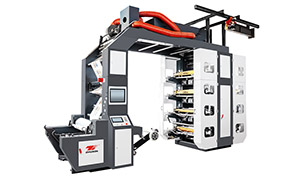
High Speed Flexo Printing Machine - Stack Flexo Flexo Printing Machine
Materials: For apparel tags, cotton or synthetic textile-backed paper is common for softness. Retail tags use bright white board with high print contrast. Industrial tags use durable materials like Tyvek, polyester, or vinyl for outdoor and chemical resistance. RFID inlays or magnetic stripes can be inserted during converting. The material must be compatible with the ink system (water-based for paper, UV for plastic). Inks must provide high rub resistance and UV stability.
Finishing options: Rotary die-cutting produces exact shapes (rectangular, curved, custom contours). Perforations allow easy tear-off. Hole punching for string or plastic fasteners is done inline or in a separate unit. Some tags have eyelets or reinforced corners. Lamination adds durability or glossy finish. Numbering and barcoding are often added via variable data printing (inkjet or thermal transfer) integrated into the flexo line.
Printing features: Flexo can print fine text, logos, and complex illustrations. The use of high-line-screen anilox and advanced plates achieves resolution comparable to offset for tags. Spot colors and UV inks produce vibrant, scratch-resistant graphics. Security features like holographic foils or covert marks can be applied.
Quality assurance: Tag dimensions must be precise for automatic attaching machines. Barcode readability is tested with verification equipment. Color consistency across different batches is critical for brand identity. Ink curing must be complete to avoid smudging when tags are stacked in bundles.
Applications: Apparel tags (size, care instructions, brand), retail price tags, shipping and logistics tags, laundry tags, medical ID tags, asset tags, and promotional tags. The growing e-commerce sector demands more tags for shipping and returns. Flexo tags and labels compete with digital printing for short runs, but flexo remains more cost-effective for medium-to-large volumes, especially when specialized converting (die-cutting, hole punching) is required. Sustainability trends favor paper tags with water-based inks and recyclable materials, which flexo handles well.