flexo repeat length
This wiki-style content explains the definition and calculation principle of flexo repeat length, describes its connection with printing cylinder circumference and flexo plate size, and illustrates how to select reasonable repeat length to meet customized pattern printing requirements.
Flexo repeat length, also known as printing cycle length, refers to the linear length of a complete repeated printing pattern on continuous roll substrates in flexographic printing. It corresponds to the outer circumference of the printing cylinder installed with flexo plates, which means one full rotation of the printing cylinder completes one complete cycle of pattern transfer. This parameter is irreplaceable for layout design, flexo plate making and press parameter debugging before formal printing production.
The core calculation formula of flexo repeat length is consistent with the actual effective outer circumference of the printing cylinder. The standard repeat length is calculated by multiplying the outer diameter of the cylinder by pi, and the thickness of flexo plates and double-sided adhesive tape for plate pasting needs to be included in actual production calculation. Any deviation between set repeat length and actual cylinder circumference will cause cumulative pattern dislocation in continuous roll printing, leading to unusable finished printed products.
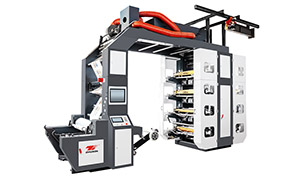
High Speed Flexo Printing Machine - Stack Flexo Flexo Printing Machine
Flexo repeat length is divided into fixed repeat length and variable repeat length according to press types. Traditional mechanical flexo presses adopt fixed printing cylinders, so their repeat length cannot be changed freely, requiring enterprises to prepare multiple cylinders with different circumferences to adapt to different pattern sizes. Modern servo flexo presses support electronic repeat length adjustment, which can realize stepless adjustment of printing cycle within a certain range without replacing printing cylinders, greatly improving the flexibility of order production.
Improper matching between pattern design size and flexo repeat length will bring multiple production problems. If the designed pattern length is larger than the maximum repeat length of the press, the complete pattern cannot be printed in a single cycle. If the pattern length does not match the standard repeat gear of the equipment, intermittent blank areas or pattern overlapping will appear on continuous printed substrates. Therefore, printing designers must confirm the repeat length parameter of the target flexo press before carrying out artwork design.
In actual flexo production, operators also need to fine-tune repeat length parameters according to substrate stretching performance. Plastic film substrates are easy to stretch under traction tension, which slightly changes the actual spacing between repeated patterns. Fine electronic compensation of repeat length can offset substrate stretching errors and ensure uniform spacing of each repeated pattern in long-distance continuous printing. Standardizing repeat length management is an essential link to improve the yield rate of flexo printed products.