flexo printing process
This wiki article introduces the full standard flexo printing process from prepress design to post-press finishing, explains key operation points of each step, and lists quality control standards throughout the whole printing workflow.
The flexo printing process is a continuous roll-to-roll relief printing workflow using flexible photopolymer plates, quantitative ink transfer by anilox rollers and low-viscosity special flexo ink. The whole process is divided into three core stages: prepress preparation, online formal printing and post-press finishing. Each stage has standardized operation specifications and quality inspection nodes to ensure stable printing quality and qualified finished packaging products.
Prepress preparation is the preliminary foundation determining final printing effect, including artwork design adjustment, flexo plate making, ink mixing, substrate inspection and machine parameter presetting. Designers need to adjust pattern size matching machine repeat length before plate making to avoid pattern dislocation. Workers need to mix flexo ink to standard viscosity and inspect substrate surface dust and tension performance before starting up the machine.
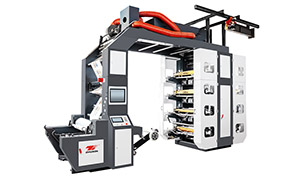
High Speed Flexo Printing Machine - Stack Flexo Flexo Printing Machine
The second core stage is online continuous printing production, which is the key link of pattern transfer. The unwinding system delivers substrates stably into each printing unit in sequence. The anilox roller transfers quantitative ink to the raised part of flexo plates, then the plate cylinder presses the printing plate against substrates to complete pattern transfer unit by unit for multi-color overlay printing. After each color printing, the drying module cures ink layers thoroughly to prevent color mixing between adjacent printing units.
Real-time online quality inspection runs through the whole formal printing process. High-speed visual cameras installed on the press detect registration deviation, ink shortage, printing streaks and dot gain defects in real time. Once abnormal patterns are detected, the system will give early warnings and automatically adjust machine parameters to eliminate defects without stopping production, reducing waste materials effectively.
Post-press finishing is the final processing step after printing, including online cooling, slitting, rewinding, die cutting and waste edge removal. Printed substrates with uncured residual heat will be cooled by the cooling roller system to avoid ink adhesion during rewinding. Then the integrated post-press module cuts roll materials into required finished sizes and completes die-cutting for label products, realizing one-stop production from raw substrate to finished goods.
Process optimization tips can improve overall efficiency and printing quality of flexo production. Enterprises can adopt automatic plate mounting systems to shorten prepress preparation time, use servo synchronous control to stabilize printing tension, and match reasonable anilox roller line counts according to pattern details. Standardizing the full flexo printing process can reduce manual errors, shorten production cycle and lower overall production cost comprehensively.