flexo printing machine operation
This article details standardized pre-operation, in-operation and post-operation operation steps of flexo printing machines, lists safety operation specifications and common misoperation risks to help operators run flexo presses safely and stably.
Flexo printing machine operation refers to standardized manual and automatic control behaviors implemented by operators to start, debug, run and shut down flexographic presses following official process specifications. Standard operation is the premise of guaranteeing printing quality, protecting machine parts and ensuring on-site personnel safety. Non-standard operation will not only cause batch printing defects and component damage, but also trigger mechanical safety accidents in severe cases.
The whole flexo machine operation process is divided into three complete stages: pre-production inspection and preparation, formal online printing operation, and post-production shutdown and cleaning. Each stage has clear operation checklists and forbidden behaviors, which are applicable to narrow web, wide web, mechanical and servo flexo printing equipment universally.
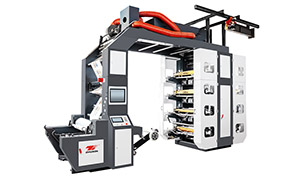
High Speed Flexo Printing Machine - Stack Flexo Flexo Printing Machine
Pre-production preparation is the first and most important operation link to eliminate hidden risks. Operators need to check mechanical parts including roller rotation flexibility, blade installation tightness and plate cylinder fixing status first. Then inspect ink viscosity, ink circulation system and drying device working status. Next set machine parameters including printing speed, tension value and printing pressure according to order requirements. Finally conduct empty machine test run for 3 to 5 minutes to confirm no abnormal vibration or noise.
Formal in-production operation focuses on real-time parameter monitoring and minor debugging. After formal feeding of substrates, operators observe initial printed samples to check color registration, ink uniformity and pattern clarity. Fine-tune printing pressure and web tension slightly if tiny defects appear. It is forbidden to adjust printing unit components or touch running rollers directly during high-speed machine operation to avoid safety injuries. Meanwhile, monitor drying temperature all the time to prevent ink smudging or substrate thermal deformation.
Daily shutdown operation follows fixed sequential steps to protect machine components safely. First stop substrate feeding and reduce machine running speed gradually instead of emergency sudden stop. Then cut off ink supply and start automatic ink circulation cleaning program to avoid residual dried ink blocking anilox roller cells. After the machine completely stops running, clean the whole ink system and printing units, arrange finished products and record operating data of the day.
Common dangerous misoperations should be strictly prohibited in daily production. These include adjusting blade pressure during machine running, ignoring pre-run empty machine inspection, operating the machine without wearing protective gloves, and overloading machine running speed beyond rated parameters. Standardizing full-process operation behaviors can greatly reduce equipment failure rate and personal safety accidents in flexo printing workshops.