flexo plate cylinder
This wiki content introduces structural composition, core functions, plate mounting specifications, pressure adjustment skills and maintenance methods of flexo plate cylinder, explaining its key role in pattern transfer and printing registration.
The flexo plate cylinder is the core rotary roller component installed inside each printing unit of flexo presses, specially used for mounting and fixing flexo printing plates. It rotates synchronously with anilox rollers and impression cylinders during operation, driving the flexible printing plate to complete contact ink transfer with substrates. The outer circumference of the plate cylinder directly determines the basic printing repeat length, making it an indispensable mechanical component affecting printing cycle size and registration accuracy.
Standard flexo plate cylinders are divided into solid integral cylinders and sleeve-type hollow cylinders according to structural design. Traditional solid plate cylinders have stable structure but heavy weight and tedious plate replacement steps. Modern lightweight sleeve plate cylinders are easy to disassemble and support fast plate changing, which are widely matched with high-speed automated servo flexo presses to shorten order switching preparation time.
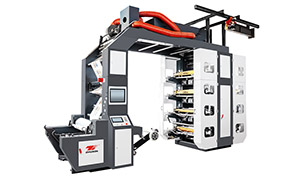
High Speed Flexo Printing Machine - Stack Flexo Flexo Printing Machine
Plate mounting precision on flexo plate cylinder directly affects final printing quality. Operators need to paste flexo plates evenly on the cylinder surface with special double-sided adhesive tape, completely eliminating bubbles between the plate and cylinder. Residual bubbles will cause local plate bulges and unclear printed patterns. Meanwhile, the splicing gap between adjacent plates on one cylinder must be controlled within 0.1mm to avoid visible blank lines on continuous printed substrates.
Printing pressure adjustment of flexo plate cylinder is a key daily operation parameter. The pressure between plate cylinder and impression cylinder decides ink transfer thickness and pattern clarity. Excessive pressure will cause dot gain and pattern edge extrusion deformation. Insufficient pressure leads to incomplete ink transfer and faint printed patterns. For different substrates and plate hardness, operators need to match targeted cylinder pressure values.
Servo-driven plate cylinders realize independent angle fine adjustment for high-precision registration. Each plate cylinder on full servo flexo presses is equipped with an independent servo motor, supporting real-time micro-angle correction during machine operation. This function eliminates cumulative registration errors generated by long-time continuous rotation and maintains consistent multi-color overlay accuracy all the time.
Scientific daily maintenance can prolong the service life of flexo plate cylinders effectively. Workers need to protect the cylinder surface from scratches and corrosion during disassembly and plate replacement. Regularly calibrate cylinder roundness and dynamic balance to avoid periodic jitter caused by cylinder eccentricity. Timely cleaning of residual adhesive and ink on the cylinder surface ensures smooth rotation and stable printing operation of plate cylinders in long-term production.