flexo ink metering
This guide describes working principles of mainstream flexo ink metering systems, compares open and closed ink metering modes, and summarizes effective methods to improve ink metering precision for consistent printing color density.
Flexo ink metering refers to the precise quantitative control process of ink transfer volume in flexo printing units, which is the core technology to ensure uniform ink color density and stable printing quality. Unlike offset printing relying on manual ink roller gap adjustment, flexo printing realizes fixed ink volume output through matched anilox rollers and doctor blade systems. Accurate ink metering avoids common defects such as color difference, ink overflow and insufficient ink coverage in batch printing production.
The core working principle of flexo ink metering relies on fixed cell volume of anilox rollers. Each tiny cell on the laser-engraved anilox roller can store fixed volume of flexo ink. After the doctor blade scrapes redundant surface ink, only ink inside cells remains, so the transferred ink volume keeps fixed theoretically. All ink metering precision control is carried out based on this quantitative ink storage structure of anilox rollers.
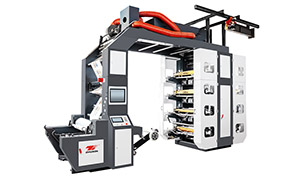
High Speed Flexo Printing Machine - Stack Flexo Flexo Printing Machine
There are two mainstream flexo ink metering modes widely used in modern printing workshops: open type single doctor blade metering system and closed chamber doctor blade metering system. The open system has simple structure and low maintenance cost, suitable for low-speed and low-precision ordinary packaging printing. The closed chamber ink metering system seals ink inside an integrated chamber, reducing ink solvent volatilization and keeping stable ink viscosity, which is the mainstream choice for high-speed automated flexo presses.
Key factors affecting flexo ink metering precision include doctor blade pressure, blade parallelism, anilox roller surface cleanliness and ink viscosity. Uneven blade pressure will lead to strip color difference on printed substrates. Blocked anilox roller cells reduce actual ink storage capacity and cause local light color. Drastic ink viscosity fluctuation changes ink fluidity and affects normal ink filling inside roller cells, breaking stable ink metering effect.
Intelligent automatic ink metering compensation system is equipped on advanced servo flexo presses. The system monitors real-time printing color density through online color sensors, automatically fine-tunes doctor blade pressure and ink circulation speed to compensate subtle ink volume deviation. This intelligent compensation keeps consistent ink metering effect throughout long-time continuous printing without manual adjustment by operators.
Daily maintenance is essential to maintain long-term stable ink metering performance. Operators need to clean residual dried ink inside anilox roller cells before each machine shutdown, check blade wear condition regularly and replace worn doctor blades timely. Standardized daily maintenance can prevent over 90 percent of ink metering failures and ensure consistent color performance of all printed batches.