flexo ink adhesion
This page explains the ink adhesion mechanism of flexographic printing, summarizes key factors affecting ink binding performance on different substrates, introduces industry standard adhesion testing methods, and shares practical ways to improve ink adhesion for various printing materials.
Flexo ink adhesion refers to the firm binding force between cured flexo ink layer and different printing substrates after printing and drying. Poor ink adhesion will lead to common quality problems such as ink peeling, ink scratching off, pattern wear and ink transfer during substrate rolling and subsequent die-cutting processes. Stable ink adhesion is a basic quality standard for qualified flexo printed products, especially indispensable for packaging products requiring long-term storage and friction resistance.
Substrate surface tension is the primary decisive factor affecting flexo ink adhesion. Most plastic films, coated papers and nonwoven fabrics have smooth and low-surface-energy surfaces, which cannot combine closely with water-based or solvent-based flexo inks. Without surface pretreatment, ink molecules can only attach loosely on the material surface and fall off easily after slight friction.
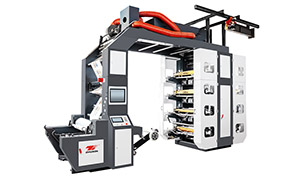
High Speed Flexo Printing Machine - Stack Flexo Flexo Printing Machine
Corona treatment is the most widely used surface modification technology to improve flexo ink adhesion. The corona machine releases high-frequency plasma to bombard the substrate surface, forming tiny rough microscopic pits and increasing surface tension effectively. Different substrates require matched corona power: plastic films need 38-42 dyn surface tension, while paper and cardboard need 32-36 dyn to reach optimal ink adhesion effect. Insufficient corona treatment leads to poor adhesion, while excessive corona will damage substrate surface structure.
Ink formula and drying conditions also greatly affect final ink adhesion performance. Water-based flexo inks rely on complete water evaporation to form compact ink films; incomplete drying will make ink layers soft and easy to peel off. UV flexo inks need sufficient ultraviolet light intensity and irradiation time for full cross-linking curing. Besides, mismatched ink types and substrates will cause permanent adhesion failure, such as common water-based ink failing to stick tightly on untreated PE film surfaces.
Standard industrial ink adhesion testing methods include tape test and rub resistance test. The cross-cut tape test is the most universal method: operators cut cross grids on printed ink surface, stick standard adhesive tape and tear off rapidly to observe residual ink ratio. Printing workshops need to conduct adhesion sampling tests every hour during mass production to avoid batch unqualified products.
Comprehensive optimization solutions can solve stubborn poor ink adhesion problems fundamentally. Operators can combine corona pretreatment, matched ink selection, optimized drying parameters and appropriate printing pressure adjustment. For special difficult-to-adhere substrates, adding adhesion promoters to flexo ink is also an efficient auxiliary measure to enhance long-term ink binding durability.