flexo impression cylinder
The impression cylinder in a flexo printing press is the cylindrical component that provides backing pressure against the plate cylinder, pressing the substrate into contact with the printing plate to transfer ink. It is a critical element that determines print clarity, dot gain, and substrate handling, especially for delicate or stretchable materials like films and thin papers.
Typically made of hardened steel with a ground and polished surface, the impression cylinder must maintain perfect roundness and concentricity. Its surface hardness (often 60-65 HRC) resists wear from abrasive substrates and allows consistent pressure distribution across the web width. Some impression cylinders have a ceramic or chrome coating for enhanced durability and reduced friction.
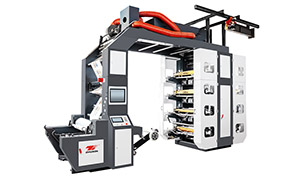
High Speed Flexo Printing Machine - Stack Flexo Flexo Printing Machine
Pressure setting: The nip pressure between the plate cylinder and impression cylinder must be precisely controlled. Excessive pressure deforms the plate, increases dot gain, and may crush the substrate (especially corrugated board). Insufficient pressure leads to incomplete ink transfer, causing voids or poor density. Typical pressure ranges from 0.1 to 0.5 mm of cylinder displacement, adjusted via micrometer screws or servo-driven actuators. For film substrates, pressure is often set lower than for paper to avoid stretching.
Substrate compatibility: The impression cylinder directly contacts the unprinted side of the web. For smooth films, a slight surface roughness or a compliant coating (e.g., rubber sleeve) may be added to improve grip and reduce slipping. For corrugated board, the impression cylinder often has a larger diameter and softer surface to avoid flute crushing. Some presses use replaceable sleeves on the impression cylinder for different substrate types.
Wear and tear: Over time, the impression cylinder surface can develop scratches, pits, or uneven wear from contaminants or abrasive fillers in the substrate. This causes localized pressure variations, leading to print mottle or ghosting. Regular inspection with a dial gauge for run-out (typically ≤0.01 mm) is essential. Resurfacing by grinding or replacement is required when wear exceeds tolerance.
Cleaning: Ink and paper dust can accumulate on the impression cylinder, especially at the edges. Use a soft cloth with isopropyl alcohol or mild solvent (compatible with cylinder coating) for daily cleaning. Avoid abrasive tools that can damage the surface. Proper cleaning prevents ink build-up that raises the effective diameter and alters pressure.
Maintenance schedule: Weekly: check for visible scratches and measure surface roughness. Monthly: verify cylinder concentricity with a dial indicator. Quarterly: lubricate bearings and check for play. Annually: professional inspection and resurfacing if needed. Always store spare impression cylinders in a climate-controlled environment with protective covers.
Impact on print quality: A perfect impression cylinder ensures sharp dot edges, consistent color density, and minimal distortion of the substrate. It is a key factor in achieving tight registration, as any slip or uneven pressure causes color misalignment. For high-quality flexo, the impression cylinder is as critical as the anilox and plate cylinders, and its condition directly affects the press's ability to run at high speeds without defects.