flexo envelope printing
Flexo envelope printing is the primary method for printing high volumes of envelopes used for direct mail, business correspondence, invoices, greeting cards, and promotional mailers. Flexo offers high speed, low cost per unit, and the ability to print on the envelope's face and flap simultaneously, with optional features like window patching and security tint.
Envelope blanks are typically made from kraft paper, white wove, or specialty papers (e.g., recycled, textured). The printing is done on the flat envelope before it is folded and glued, usually on a web-fed flexo press that unwinds a roll of paper, prints multiple envelopes across the web width, then cuts, folds, and glues them into finished envelopes inline. These presses are called "envelope converting presses" and combine printing and converting.
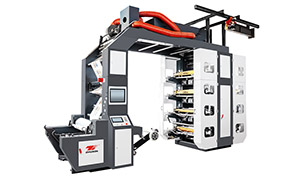
High Speed Flexo Printing Machine - Stack Flexo Flexo Printing Machine
Press configuration: A typical envelope flexo press has 2-6 printing decks (often 2-4 colors) with a maximum web width of 800-1200 mm, speeds up to 600 m/min, and produces 1000-3000 envelopes per minute depending on size. Print units are stack-type for easy access, and the plates are thin, flexible. The impression cylinders are hardened and precise to handle paper's thickness variations.
Inks: Water-based flexo inks are overwhelmingly used for envelopes due to low odor, quick absorption into paper, and compliance with mailing regulations (no smearing after drying). They are formulated to dry by evaporation and absorption into the paper fibers. For security envelopes (with hidden patterns inside), special fugitive inks or security tints are applied on the inner side using additional printing units. Some high-end envelopes use UV inks for spot varnish or glossy logos.
Window patching: Many envelopes have a transparent plastic window for address visibility. The patching unit applies a film patch (usually clear PET) over a die-cut opening, using adhesive or heat sealing. The patch must not interfere with printing, and registration between the die-cut, print, and patch is critical. This is done inline after printing.
Security features: For financial and official envelopes, security tint (a patterned background) is printed on the inside to prevent see-through or tampering. It is usually a single color applied before the envelope is folded. Magnetic or fluorescent inks for sorting machines may also be printed for postal automation.
Quality control: Print clarity on the address panel is crucial for OCR readability. Ink adhesion and rub resistance are tested. Drying must be complete before folding to avoid smearing. Paper moisture content is monitored to prevent curling. Inline cameras check for print defects and missing windows.
Production efficiency: Quick job changeover is essential as envelope sizes and print designs vary widely. Sleeve technology and anilox quick-change systems reduce setup time. The integration of digital print heads for variable data (e.g., personalized addresses) is growing, with hybrid presses adding inkjet after flexo print. Flexo envelope printing remains the most cost-effective method for large mailings, with continuous improvements in automation and print quality to meet postal regulations and customer expectations.