flexo bag printing
Flexo bag printing refers to printing on pre-formed bags or on roll stock that will be converted into bags, including paper carry bags, polyethylene shopping bags, woven polypropylene (PP) sacks, multi-wall cement bags, and fertilizer sacks. Flexo is the dominant process for bag printing due to its ability to handle rough surfaces, high speeds, and low cost per impression.
The printing can be done inline on bag-making machines or offline on separate flexo presses. For plastic bags (LDPE, HDPE, PP), the printing is typically on the outside surface of the film, often using surface printing (directly on the film) or reverse printing for lamination. For paper bags, printing is usually on the outer ply before or after bag formation. Multi-wall sacks often have printing on the top ply (typically kraft paper or PP woven) before filling.
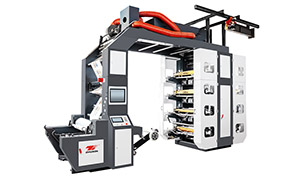
High Speed Flexo Printing Machine - Stack Flexo Flexo Printing Machine
Press types: For roll-fed bag stock, CI flexo presses are common for high-quality multi-color work on films, while stack presses are used for wider webs and heavier materials like woven PP. For pre-formed bags (e.g., ready-made paper bags), flatbed or cylinder presses are used, but these are less common. Most high-volume bag production uses roll-to-roll flexo with inline slitting, handles, or gusset-forming units.
Inks: Water-based inks are standard for paper and kraft sacks, offering good adhesion and eco-friendliness. For plastic bags, solvent-based inks are still widely used for their superior adhesion on untreated films, although surface treatment (corona) allows water-based and UV inks to be used on certain films. UV inks are growing for premium plastic shopping bags with high gloss and fast curing. For woven PP sacks, ink must penetrate the porous weave; special solvent-based or UV inks with good rub resistance are used.
Drying: Water-based inks require significant drying energy; hot air impingement is typical, with IR boosters for heavy coverage. For plastic films, chill rolls after drying help cool the web. Solvent-based inks dry quickly with moderate heat but need solvent emission control. UV curing is instant and energy-efficient, but the ink cost is higher.
Handling and converting: After printing, the roll may be slit to the required bag width, gusseted, and heat-sealed or glued. For pre-made bags, the printed rolls are fed into bag-making machines that cut and seal the bottom. Registration marks are critical for aligning graphics with the bag's closure features. Some inline presses incorporate handles punching or zipper applications.
Quality considerations: Abrasion resistance is crucial for bags that will be stacked and transported. Overprint varnish or laminates are often added. Color opacity is important to prevent show-through of contents. For food-contact bags, low-migration inks and FDA-compliant coatings must be used.
Market segments: Retail shopping bags (high-quality graphics, promotions), industrial sacks (cement, chemicals, pet food – mostly 1-2 colors, robust), agricultural bags (seed, feed – weather-resistant). Flexo bag printing competes with gravure for long-run plastic bags, but flexo's faster setup and lower plate cost make it the choice for medium runs. Sustainability trends favor paper bags with water-based inks and recyclable monomaterial bags, driving innovation in flexo bag printing technologies.