UV Photochemical Curing Mechanism of Digital Photopolymer Plate and Dot Reproduction Accuracy
This deep technical article explains ultraviolet cross-linking curing mechanism of solid photopolymer plates, analyzes how exposure parameters affect plate cross-linking density and dot edge sharpness, and compares dot reproduction performance of analog and digital photopolymer plates.
Photopolymer printing plates rely on ultraviolet-induced molecular cross-linking reaction to form hardened relief patterns. The uncured liquid photopolymer resin keeps soft state and will be washed away during developing process, while UV-exposed areas produce dense polymer cross-linking structure to form wear-resistant printing relief. The cross-linking density directly determines plate hardness, resilience and fine dot reproduction capability.
Front exposure and back exposure have differentiated functions for photopolymer plate performance. Back exposure enhances overall plate base hardness and structural stability to avoid plate deformation during printing. Front exposure defines the accuracy of pattern edge and halftone dot shape, which is the decisive exposure process for printing fine pattern quality.
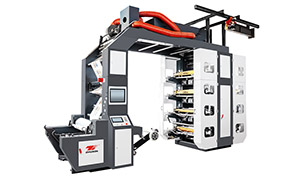
High Speed Flexo Printing Machine - Stack Flexo Flexo Printing Machine
Insufficient and overexposure both damage
photopolymer plate printing performance. Insufficient front exposure leads to incomplete molecular cross-linking, soft dot edges and easy dot deformation under printing pressure. Overexposure causes light diffusion around pattern edges, making tiny closed dots open and fine line patterns thicker than original design.
Digital laser direct plate making improves photopolymer plate precision by eliminating film intermediate link. Traditional analog plate making adopts film covering exposure, producing light scattering error of 0.02mm to 0.04mm. Digital direct exposure realizes 0 error optical imaging, retaining original 1% highlight dots and 99% shadow dots completely for high-gradient pattern printing.
Photopolymer plate washing parameter matching affects final relief depth. Washing solution concentration, washing time and spraying pressure determine the depth of uncured resin removal. Excessive washing erodes dot edges; insufficient washing leaves residual uncured resin and causes pattern sticking during printing. Standardized washing parameters keep consistent relief depth across all plate areas.
Post-curing UV exposure further improves photopolymer plate wear resistance. Post curing increases overall cross-linking density by 15%, enhancing plate surface scratch resistance and ink corrosion resistance. Proper post-curing treatment extends photopolymer plate service life by 30% without damaging existing fine pattern details.