Flexo Printing Troubleshooting: Systematic Diagnostic Framework for Process Deviations
Troubleshooting flexo printing issues requires a structured approach rather than trial-and-error. A systematic diagnostic framework enables operators to quickly isolate the root cause of quality deviations, minimizing downtime and waste. This article presents a step-by-step methodology based on process mapping and cause-and-effect analysis.
The first step is to define the defect precisely: location (across width, repeat pattern, random), severity, and whether it appears on all colors or a single deck. This initial observation narrows the possible causes. For example, a defect that repeats every cylinder revolution points to a mechanical issue (run-out, bearing), while a random defect suggests contamination or ink condition. A defect that appears only on one color implicates that deck's components; if all colors are affected, the substrate or common elements (unwind, tension) are suspect.
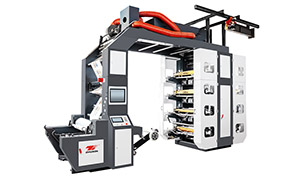
High Speed Flexo Printing Machine - Stack Flexo Flexo Printing Machine
A fishbone (Ishikawa) diagram categorizes potential causes into six groups: Material (substrate, ink), Machine (rollers, bearings, gears), Method (settings, procedures), Man (operator skill), Measurement (sensors, calibration), and Environment (temperature, humidity). For each defect, the operator checks each category systematically. For example, for a density variation, check: Material – ink viscosity and pigment load; Machine – anilox condition and impression pressure; Method – speed and dryer settings; Measurement – densitometer calibration; Environment – temperature stability.
Prioritization: Not all causes are equally likely. Statistical process control (SPC) data from the press can highlight which parameters have shifted recently. A Pareto analysis of past defects can reveal the most frequent root causes (e.g., 60% of issues are due to anilox wear or doctor blade problems). The troubleshooting sequence should start with the most probable causes based on historical data, then move to less common ones. This reduces diagnostic time significantly.
For mechanical issues, vibration analysis and thermal imaging are powerful tools. A sudden increase in vibration at a specific frequency indicates bearing or gear wear; thermal hotspots on rollers indicate friction or cooling failure. The press's built-in diagnostics can often trigger alarms before the defect becomes visible, enabling proactive troubleshooting.
For process issues (ink, drying), the approach is experimental: adjust one variable at a time (e.g., increase air temperature by 5°C, or reduce impression by 0.05 mm) and observe the effect. Keep a log of adjustments and outcomes; this builds a knowledge base for future troubleshooting. The "5-Why" method is useful: ask "why" repeatedly to drill down to the fundamental cause (e.g., "Why is density low?" → "Anilox volume is low." → "Why?" → "Cells are clogged." → "Why?" → "Cleaning frequency insufficient.").
Documentation and training: Every troubleshooting event should be documented with the defect description, root cause, corrective action, and prevention measures. This becomes a reference manual for operators. Regular training sessions using case studies improve team competency. By implementing a systematic diagnostic framework, flexo plants can reduce average troubleshooting time from 30 minutes to under 10 minutes, significantly improving OEE and reducing waste.