Flexo Printing Machine Price Breakdown: Cost Components and Factors Influencing Price
The price of a flexo printing machine varies widely, from $200,000 for a basic narrow-web stack press to over $5 million for a high-end wide-web CI press with full automation. Understanding the cost components and price drivers enables buyers to compare quotes and negotiate effectively.
Base price: This includes the press frame, basic drive system (motors, gearboxes), standard decks (without anilox or plates), unwind/rewind, and basic control system. The base price depends on the press type (CI vs. stack), web width, and number of decks. A 6-color narrow-web CI press may start at $800,000; a wide-web stack press at $1.2 million. The base price can vary by manufacturer and region (German/Italian presses are more expensive than Chinese or Indian).
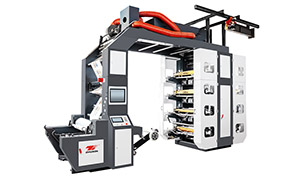
High Speed Flexo Printing Machine - Stack Flexo Flexo Printing Machine
Options and extras: Anilox rollers (each $500-$2000), plate cylinders or sleeves (each $1000-$5000), advanced drying systems (UV LED vs. mercury, extra $100k-$300k), automation (automatic register, impression, wash-up – add $100k-$500k), special features (cold foil, lamination station, inline die-cutting – add $200k-$800k). The total with options can be 50-100% above the base price. Buyers must carefully select options that are essential for their applications.
Automation level: As discussed, automation has a direct price impact. A fully automatic press with servo drives, camera register, and job recipe storage may cost 30-50% more than a manual press. However, the labor savings and waste reduction can justify the higher price. The decision depends on the mix of short vs. long runs.
Regional and brand factors: European and Japanese brands (e.g., Bobst, Windmöller & Hölscher, Nilpeter) command premium prices due to their quality, reliability, and service network. Chinese brands are more affordable but may have lower resale value and longer lead times for parts. The price also includes shipping, installation, and training; these can add 5-15% of the machine price.
Used vs. new: A used press can be 30-60% cheaper than a new one, but may lack modern automation and have higher maintenance costs. The buyer should factor in the remaining life of critical components (anilox, bearings) and the availability of parts. A refurbished press with new control system can be a cost-effective option.
Negotiation tips: Request itemized quotes to compare options. Consider buying a demo or showroom model. Negotiate on service agreements and spare parts discounts. Also, consider the total cost over the machine's life (TCO) rather than just the purchase price. By understanding the price components, buyers can make informed decisions and select a machine that meets their needs and budget.