Flexo Press Manufacturer: Engineering Capabilities and Innovation Benchmarking
Choosing the right
flexo press manufacturer is as critical as choosing the press itself. Leading manufacturers invest heavily in R&D to improve press speed, quality, and automation. This article provides a technical comparison of key manufacturers' engineering strengths and innovations.
European manufacturers (e.g., Bobst, Windmöller & Hölscher, Omet, Nilpeter) are renowned for precision engineering, robust frames, and advanced servo drive systems. They have pioneered features like sleeve technology, automatic register control, and energy-efficient drying. Their presses are often modular, allowing upgrades. Their R&D focuses on Industry 4.0 integration, AI-based defect detection, and sustainable solutions. The downside is higher cost and sometimes long lead times.
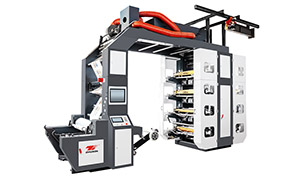
High Speed Flexo Printing Machine - Stack Flexo Flexo Printing Machine
Asian manufacturers (e.g., from China, India) offer cost-effective solutions with adequate quality for many applications. They have improved rapidly in recent years, adopting servo drives and automation. However, they may lag in advanced drying (LED, heat recovery) and control software. Their service networks may be limited outside their home region. They are suitable for converters with budget constraints and basic requirements.
American manufacturers (e.g., PCMC, Mark Andy) are strong in specific segments: PCMC in wide-web CI and flexo packaging, Mark Andy in narrow-web labels. They are known for robust construction and customer support in the Americas. Their innovation includes quick-change systems and user-friendly HMIs.
Key innovation areas to compare: Drive technology – independent servo per deck vs. line shaft; register control – camera-based with predictive algorithms; drying – heat recovery, LED integration; automation – job recipe management, remote diagnostics; sustainability – eco-friendly materials, energy monitoring. Also, consider the manufacturer's investment in training and after-sales support.
OEM vs. system integrator: Some manufacturers are pure OEMs; others offer complete solutions including prepress, inks, and finishing. A one-stop solution can simplify integration but may limit choice.
Benchmarking: Request a demonstration at the manufacturer's facility, or visit a current user. Evaluate the press's actual performance (speed, waste, quality) in production. Ask about software upgrades and future roadmap. A manufacturer that listens to customer feedback and continuously improves is preferable.
Service and spare parts: Check the availability of spare parts and the response time for service calls. Some manufacturers have regional hubs; others rely on distributors. A service agreement is often recommended. Also, assess the manufacturer's financial stability – a failing manufacturer could leave you without support.
By benchmarking manufacturers' engineering capabilities and support, buyers can select a partner that not only provides a machine but also ensures long-term productivity and technological relevance.