Flexo Press Cost: Operating Expense Analysis and Cost per Impression Optimization
Beyond the upfront cost, the operating expenses (OPEX) determine the long-term profitability. This article breaks down the key OPEX components and provides strategies for optimizing cost per impression.
Energy cost: This includes electricity for motors, drives, and drying/curing, as well as gas or electricity for heating the dryer air. Energy is often the second largest operating cost after materials. To optimize, use high-efficiency motors (IE3), LED curing, and heat recovery systems. Monitor energy consumption per square meter and benchmark against industry averages. Also, consider using waste heat from the press for space heating.
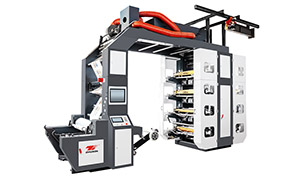
High Speed Flexo Printing Machine - Stack Flexo Flexo Printing Machine
Consumables: Anilox rollers (wear and need replacement every 2-5 years), doctor blades (daily/weekly replacement), plates (cost per job, but can be re-used), and inks. To reduce anilox cost, use ceramic with long life and clean regularly. Doctor blade life can be extended by using correct pressure and angle. Plate cost can be reduced by using sleeve systems that allow re-mounting. Ink cost: minimize waste by using automated viscosity control and closed chambers; consider bulk ink purchase discounts.
Labor cost: The number of operators per shift and their skill level. Automation reduces labor; a fully automated press may need one operator per shift, while a manual press may need two or three. Training improves operator efficiency, reducing downtime and waste. Cross-training operators can improve flexibility.
Maintenance cost: Preventive maintenance is cheaper than reactive repairs. A scheduled lubrication and inspection program extends component life. Use predictive maintenance (vibration, temperature) to catch issues early. The cost of spare parts inventory can be managed by criticality analysis (stock only high-wear parts). Consider a service contract that covers parts and labor for a fixed annual fee.
Waste and rejects: Reducing waste directly lowers cost per good impression. Automation (register, impression, inspection) reduces waste. Also, optimizing changeover reduces start-up waste. Track waste percentage and set improvement targets.
Cost per impression (CPI) calculation: CPI = (Total operating cost per year) / (Number of good impressions per year). Impressions can be measured in square meters or number of labels. Benchmark your CPI against industry averages. To improve, focus on the largest cost drivers. For example, if energy is a big cost, invest in LED; if waste is high, improve automation; if labor is high, increase automation or training.
Continuous improvement: Implement a lean manufacturing approach; use data from the press to identify inefficiencies. Regularly review OPEX and make adjustments. By systematically optimizing each cost component, flexo presses can achieve low cost per impression, maintaining competitiveness in a price-sensitive market.