Flexo Post-Print: Process Optimization for High-Speed Corrugated Printing with Reduced Waste
To remain competitive in the corrugated market, post-print converters must maximize speed and minimize waste. This requires optimization of the entire workflow: from board feeding to printing to drying and stacking. This article presents advanced strategies for post-print efficiency.
The main bottlenecks in post-print are changeover time, register setup, and drying. Changeover includes plate changes, ink color changes, and impression adjustment. Quick-change systems: plate sleeves (rather than solid plates) reduce mounting time; anilox sleeves allow rapid volume changes; and quick-release doctor blade chambers cut cleaning time. Using a job recipe system that stores all settings (impression force, pressure, anilox volume) reduces setup to under 10 minutes.
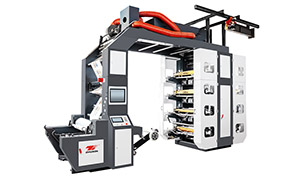
High Speed Flexo Printing Machine - Stack Flexo Flexo Printing Machine
Register control: Post-print register errors are often due to board skew or tension variations. Using a feed table with side guides and a pull-roll system ensures consistent board feeding. Mark sensors on each deck detect register marks; the control system adjusts the plate cylinder phase. For high speed, a predictive algorithm that accounts for the board's inertia improves accuracy. The target is ±0.1 mm for multi-color jobs.
Drying efficiency: Since water-based inks rely on absorption, the drying system must be optimized for the board's porosity. Pre-heating the board before printing can speed up absorption. Using high-air-velocity dryers with impingement nozzles improves the evaporation of surface water. The dryer's exhaust must be controlled to avoid condensing water on the board. In-line moisture sensors can adjust dryer temperature based on real-time board moisture.
Waste reduction: Start-up waste is minimized by using "pre-register" where the plate positions are pre-set based on the board length. The press can also include a "waste gate" that diverts the first few sheets to a reject bin. Running waste (defects) is reduced by inline inspection; the system can stop or slow down when a defect is detected, allowing correction before many defects occur.
Stacking and handling: The printed sheets must be stacked without scuffing. The delivery section uses air jets to separate sheets and a braking system to prevent damage. The stack height and pressure are controlled to avoid blocking. The stacking system can be integrated with a conveyor to feed the next process (die-cutting).
Maintenance: Regular cleaning of anilox, doctor blades, and impression sleeves is essential. Using automatic wash-up systems reduces downtime. A scheduled maintenance program with vibration analysis and alignment checks ensures consistent performance. By implementing these optimizations, post-print converters can achieve speeds up to 300 m/min with waste below 2%, making them highly efficient for short and medium runs.