Flexo Plate Mounting Error Classification and Full-web Pattern Defect Correction Method
This technical paper classifies three types of flexo plate mounting errors, analyzes corresponding printing defects one by one, and introduces automatic plate mounting calibration technology to eliminate manual mounting errors efficiently.
More than 35% of flexo printing pattern defects originate from inaccurate flexo plate mounting instead of machine parameter errors. Manual plate mounting inevitably produces tiny errors including bubble residue, splicing gap deviation and plate angular offset. These subtle mounting errors are amplified after high-speed cylinder rotation, forming obvious visual printing defects on finished substrates.
Three typical
flexo plate mounting errors are residual bubble error, transverse splicing gap error and longitudinal angular deviation error. Residual bubbles form local raised points on plate surface, leading to partial over-pressure and thick ink spots. Uneven splicing gaps produce straight blank lines on continuous printed patterns. Longitudinal angular offset causes full-web gradual registration deviation.
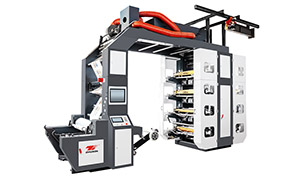
High Speed Flexo Printing Machine - Stack Flexo Flexo Printing Machine
Residual bubble defect formation mechanism and elimination standard: bubbles between plate and cylinder cannot be discharged completely during manual lamination. Bubbles with diameter over 0.5mm will cause visible printing defects. Vacuum plate mounting machines are equipped to realize bubble-free full lamination automatically, reducing bubble-related defects to nearly zero compared with manual mounting.
Transverse splicing gap control standard for multi-plate combination installation. The allowed maximum splicing gap is 0.08mm for fine pattern printing and 0.15mm for rough color block printing. Excessive gap cannot be compensated by printing pressure adjustment, and will generate permanent blank lines running through all printed batches.
Longitudinal angular deviation error causes progressive register deviation along web running direction. A 0.1-degree angular offset of printing plate will produce 0.3mm cumulative register error after 100 meters of continuous printing. Automatic visual plate alignment system calibrates plate angle before printing startup to eliminate angular mounting deviation completely.
Post-mounting plate static balance calibration is a supplementary precision process. Unbalanced plate mounting causes periodic cylinder jitter during rotation, bringing regular transverse printing stripes. Static balance calibration corrects unbalanced weight distribution caused by plate splicing, ensuring smooth cylinder rotation and stable full-width printing pressure.