Flexo Ink Adhesion: Interlayer Adhesion in Laminated Structures and Adhesive Compatibility
In flexible packaging, the printed layer is often laminated to a sealant film or to another layer to form a multi-layer structure. The adhesion between the ink and the adhesive used in lamination is critical; if the ink-adhesive bond fails, delamination occurs, compromising the package integrity. This article examines the interface between ink and adhesive, and how to optimize it.
The lamination adhesive is applied over the printed surface. It must wet the ink film and form a strong bond. The ink film's surface energy and chemistry determine its receptivity to the adhesive. Most inks have a surface energy of 30-35 dynes/cm, which is lower than that of typical adhesives (35-40 dynes/cm). Good wetting is achieved, but chemical compatibility is also needed. For solvent-based adhesives, the solvent may swell the ink layer, promoting adhesion; for solvent-less adhesives, the reactive groups in the adhesive must be able to penetrate or bond with the ink resin.
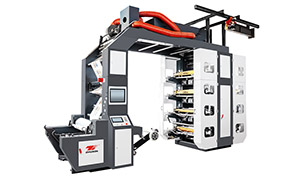
High Speed Flexo Printing Machine - Stack Flexo Flexo Printing Machine
Ink composition effects: The resin binder of the ink is the key. Polyurethane resins are known for excellent adhesion to both substrates and adhesives because of their multiple reactive groups (urethane and urea). Acrylic resins may have lower interlayer adhesion. The pigment loading can also affect adhesion – high pigment load reduces the resin content at the surface, potentially weakening the bond. The use of adhesion promoters (e.g., isocyanates) in the ink or adhesive can enhance interlayer adhesion.
Testing interlayer adhesion: The standard test is the 90° or 180° peel test after lamination. A sample is cut, and the layers are peeled apart; the force is recorded. Failure can occur at the ink-substrate interface, the ink-adhesive interface, or within the adhesive. To identify the failure mode, the peeled surfaces are examined: if the ink is visible on both sides, the failure is within the ink-adhesive interface; if the ink is completely on one side, it's ink-substrate. The target is to achieve cohesive failure (in the adhesive or ink), which indicates strong interlayer bonding.
Factors affecting interlayer adhesion: Drying of the ink before lamination – if the ink is over-dried, it becomes brittle and may not bond well; if under-dried, residual solvents can interfere with the adhesive. The adhesive application weight and nip pressure also affect the bond – adequate pressure ensures contact and penetration. Cure time and temperature for the adhesive must be optimized.
Troubleshooting delamination: If delamination occurs at the ink-adhesive interface, the solutions include: using a different ink resin (e.g., switch to polyurethane), adding a primer over the ink before lamination, or adjusting the adhesive formulation (e.g., use a lower-viscosity adhesive for better wetting). Also, check the lamination nip temperature and pressure. In some cases, increasing the ink film thickness can improve adhesion.
Case example: A converter producing stand-up pouches experienced delamination of the printed PET layer from the PE sealant film. Analysis showed that the ink (acrylic-based) had low surface reactivity. Switching to a polyurethane-based ink and adding a primer improved the peel strength from 1.5 N/cm to 4.0 N/cm, eliminating delamination. By understanding the interlayer adhesion principles, converters can ensure robust laminates that meet the stringent requirements of food and medical packaging.