Core Technical Gap Between Flexographic Printing and Digital Printing for Packaging Production
This technical article reveals essential technical differences in imaging principle,color management,production mode and material adaptation between conventional flexo printing and digital inkjet printing,and analyzes their applicable packaging production scenarios.
Flexo printing is a traditional plate-based contact printing technology requiring physical printing plates,anilox rollers and fixed ink metering systems,while digital inkjet printing is a plate-free non-contact digital imaging technology without any printing plates or pressure transfer structures.Flexo relies on physical pressure to complete ink transfer,while digital printing sprays ink droplets directly onto substrates via precise piezoelectric nozzles,the fundamental difference determining all subsequent quality and efficiency gaps.
Color management and color gamut reproduction performance have obvious differences.Flexo adopts fixed spot color matching with limited color gamut,and needs independent plate making for each single color channel.The color consistency depends on stable ink viscosity and printing pressure.Digital printing uses four-color or seven-color mixed color gamut,with real-time digital color calibration,realizing wider color gamut and more accurate color gradient restoration without physical plate limitation.
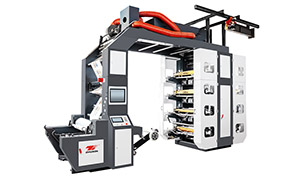
High Speed Flexo Printing Machine - Stack Flexo Flexo Printing Machine
Variable data printing capability is the biggest technical advantage of digital printing.Flexo can only print fixed repeated patterns and cannot support serial number,QR code and personalized variable content modification during production.Any pattern revision needs remaking printing plates with high time and material cost.Digital printing supports real-time variable data editing in full production process,perfectly adapting to personalized small-batch customized packaging demands.
Production speed and batch adaptation reverse their advantages in different order volumes.Digital printing has fast startup speed without prepress debugging,suitable for orders below 5000 pieces.However its single-machine running speed is limited below 120m/min with high unit ink cost.Flexo needs long prepress debugging but supports high-speed continuous production over 400m/min,with ultra-low unit cost for orders above 20000 pieces.
Substrate surface tolerance difference between contact and non-contact printing.As contact printing,flexo can cover rough substrate surface defects via proper printing pressure,but may cause substrate stretching and plate wear.Digital non-contact printing will expose all substrate surface flaws completely without pressure deformation,but cannot compensate uneven substrate surfaces through mechanical adjustment.
Hybrid flexo-digital combined production line becomes mainstream industrial solution currently.The front flexo unit completes fixed large-area color background printing with low cost and high speed,while the rear digital unit adds personalized variable data and fine patterns.This hybrid mode combines cost advantage of flexo and flexible advantage of digital printing to cover full-batch order demands.