Compression Deformation Characteristics of Flexo Plate and Printing Pressure Matching Mechanism
This technical article studies dynamic compression and resilience characteristics of flexible flexo plates under cyclic printing pressure, analyzes plate deformation induced dot gain and pattern edge blur, and establishes pressure matching model for different plate hardness.
Flexo plates are elastic relief printing materials, and cyclic compression deformation under continuous printing pressure is an inevitable physical process during operation. Each printing cycle brings instant compression and rebound of plate relief patterns. Insufficient resilience causes permanent plate deformation, while excessive compression leads to serious dot expansion and blurred pattern edges.
Flexo plate shore hardness is the core indicator determining compression deformation degree. Soft plates with shore A 30-35 have strong fitting ability for rough substrates but large compression deformation under pressure, easy to produce dot gain. Hard plates with shore A 45-50 have small deformation and excellent fine pattern restoration, but poor fitting performance for uneven substrate surfaces.
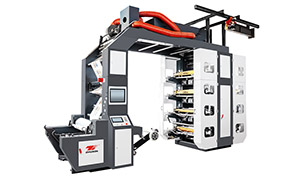
High Speed Flexo Printing Machine - Stack Flexo Flexo Printing Machine
Dynamic compression fatigue of
flexo plates accumulates with printing mileage increase. After 500,000 printing cycles, the plate surface resilience decreases by 7% due to material fatigue, making pattern edges unable to rebound completely. The accumulated fatigue deformation leads to gradually fuzzy printed patterns even with unchanged printing pressure parameters.
Printing pressure threshold matching for different flexo plate hardness: soft plates require low printing pressure of 0.12MPa to avoid over-compression deformation; medium hardness plates match standard pressure of 0.18MPa; hard plates adapt to relatively high pressure of 0.25MPa to ensure complete ink transfer. Mismatched pressure is the primary manual operation error damaging flexo plate performance.
Plate mounting adhesive tape thickness affects actual compression state of flexo plates indirectly. Thick mounting tape increases overall buffer performance of plate assembly and reduces direct compression force on plate relief. Thin tape transfers more pressure to printing plate directly and aggravates plate deformation. Tape thickness must be matched with plate hardness as a complete system instead of separate parameter setting.
Low-temperature plate aging mechanism affects elastic performance in winter workshop environments. Low ambient temperature reduces flexo plate material resilience, making plates harder and less flexible. Operators need to increase workshop temperature moderately or reduce printing pressure by 10% in low-temperature seasons to compensate temperature-induced plate performance change.