Buy Flexo Printing Machine: Technical Specification Checklist for Capacity and Capability
Purchasing a flexo printing machine is a major investment requiring a thorough analysis of technical specifications to match current and future production needs. This article provides a comprehensive checklist of specifications, categorized by machine type (narrow, mid, wide web; CI, stack, inline) and application (labels, film, board, flexible packaging).
First, define the substrate range and web width. For labels, narrow web (200-600 mm) is typical; for flexible packaging, mid-web (600-1200 mm); for corrugated pre-print, wide-web (1200-2800 mm). The machine must accommodate the maximum substrate thickness and type (film, paper, board). The web width determines the press size and the cost of anilox rollers and plates. Consider future expansion: a press that can handle wider webs may be more versatile.
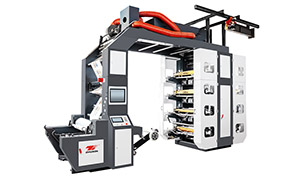
High Speed Flexo Printing Machine - Stack Flexo Flexo Printing Machine
Repeat length and cylinder circumference: The press must have a repeat length range that covers your job sizes. For labels, repeat lengths from 200-800 mm are common; for film, up to 1200 mm. The press should have a range of plate cylinder sizes or sleeves; the number of sleeves needed depends on the variation of job repeats. The cost of a large sleeve inventory should be factored into the budget.
Printing speed: The maximum speed (m/min) should be at least 20% higher than your current highest speed to allow for future productivity. For film, speeds of 400-600 m/min are common; for board, 200-300 m/min. The speed must be achievable with the intended ink and drying system; some presses are mechanically capable but limited by drying capacity.
Color count and configuration: Determine the number of color decks needed (typically 4-10). For process printing, 6-8 colors. Consider if you need additional stations for varnish, cold foil, or coating. The press should be expandable – adding decks later may be possible but expensive. The deck arrangement (CI vs. stack) affects quality and changeover time; CI is better for film, stack for board.
Automation level: Automated features include: automatic register control, impression setting, plate mounting (sleeve), anilox change, wash-up systems, and job recipe storage. Higher automation reduces operator dependency and setup time but increases cost. For short runs, automation is crucial; for long runs, it may be less critical. The control system should be user-friendly and support remote diagnostics.
Drying/curing system: Match the drying type to the ink and substrate: hot air for water-based and solvent, UV for UV inks, IR as booster. The dryer length and power must be sufficient for the maximum speed and ink coverage. Energy efficiency (heat recovery, LED) should be evaluated.
After-sales support: Check the manufacturer's service network, spare parts availability, and training programs. A service agreement may be beneficial. By carefully checking these specifications, buyers can select a flexo printing machine that delivers optimal productivity, quality, and ROI for their specific application.